Huangshan Weather


Huangshan Attractions - History and Culture Class
View by Classification:
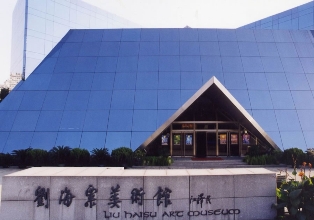
Liu Hai Su Art Museum
Liu Haisu Art Museum is a new national art museum in Shanghai. Locating at the west part of Hongqiao Development Zone, it enjoys beautiful environment and convenient transportation. The museum is named after Mr. Liu Haisu, one of the founders of China New Art Movement, and in scribed by the nation's President, Jiang Zemin. The museum had its grand opening on May 16, 1995. It combines the functions of art museum, small-scale museum, and individual memorial hall as a whole. The museum aims to ... View Detail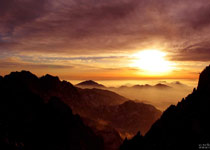
Pai Yunting
Introduction It is located 1 kilometer from the north of the Feilai Stone and is the ideal place to watch Yellow Mountains skillful stone. It has the name of skillful stone exhibition hall. Standing on the Paiyun Pavilion, one could take in the view of mountain twisting and turning in the fog like an island in the sea. Huangshan is beautiful all year round. In spring (March to May), all flowers blossom, pines turn green and the birds sing beautifully. Summer (June-August) is the best ... View Detail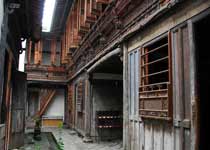
Cheng Miyake
In Chenghua years of Ming Dynasty, Chengmin (the minister of the board of rites and ceremonies), built three residences on the No. 7, 8, 28 of Baishu Dongli Lane of Tunxi. Three Residences of Chengshi is called the "Rarity of Ming Residences" by Fu Xinian (historical building expert of Forbidden City), having very high value of researching and appreciating. They have similar structure but distinguishing features. No. 7 building has more than 600 years' history; No. 8 building has the ... View Detail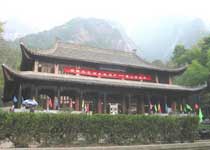
Ciguang Ge
The temple that originally rested on this site was named Fahai Temple and renamed Ciguang Temple in the Ming Dynasty. It is now the location of the Ciguangge Hotel, above which is the Hansha Mountain Ridge and the Miaozhi Pavilion. Behind the ridge is the Horse-Standing Pavilion, where one can see the 10 Chinese characters "Li Ma Kong Dong Hai, Deng Gao Wang Tai Ping" (Look ahead to Dong Hai and Tai Ping at the top of the Horse-Standing Peak) carved on the precipice. ... View Detail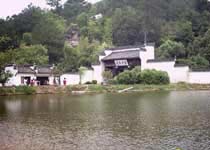
Potential population of ancient buildings
The complex is a collection of an arch bridge, a curb pavilion, a clan memorial archway, three ancestral temples and many dwelling houses. In an attempt to better preserve and promote ancient heritage and its culture, Those constructions of Ming Dynasty was moved here from other villages, and restored in the way they used to be. The move and restoration work began in 1984, and in 1999 it opened to the public. Located in Qiankou town of Huizhou district, it covers an area of 16,000 square ... View Detail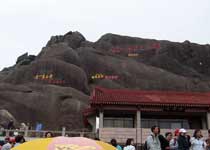
Jade Screen
Standing high in the clouds, Jade Screen Pavilion is known as an imperial palace in the heaven. Adjacent to it are the Bright Top Peak, the Lotus Flower Peak and the Heavenly Capital Peak over 1800 meters above sea level. The Yuping Pavilion stands against the 1,668-meter high Jade Screen Peak. At over 5500 feet, the Jade Screen offers a panoramic view of the whole mountain. A unique experience is to watch white cloud masses drift below after rain, when picturesque mountain peaks, fantastic ... View Detail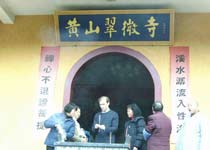
Cuiwei Temple
Cuiwei Temple is the only temple where monks live in, it beneath the Cuiwei Peak of Huangshan. In the third year of Zhonghe in Tang Dynasty (883), an ancient Indian monk came to Huangshan from Sichuan. Since he weaved the sackcloth for himself, survived by bracken fern and wild fruit, people called him Sackcloth Monk and built a temple for him which was named "Sackcloth Bodhimandala". In 947, Lijing bestowed it another name "Cuiwei Temple". Around the temple, there are ... View Detail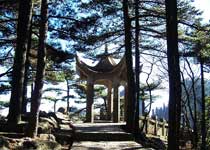
Dawn Pavilion
Located on the end of Lion Peak, above the Sanhua Dock, opposite to Shixin Peak, Shuguang Pavilion is a little foursquare pavilion, about 10 square meters. Tourists could view the sunrise here, so hence the name "Shuguang Pavilion". Look down from the pavilion; you could see the stone Eighteen Disciples of the Buddha between Shixin Peak and Shangsheng Peak on the east, "YunTaoPuJin" on the north, "Lion Peak" on the west. Huangshan is beautiful ... View Detail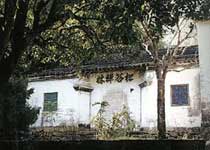
Matsutani Hermitage
After a visit to the Pine Valley Temple visitors can cross a bridge to reach the Pine Valley Nunnery, which is nestled at the foot of the Diezhang Peak. Originally built in 1253A.D, the nunnery was rebuilt in 1426A.D. The surroundings here are quiet and pleasant. It is a good place to enjoy the ancient stone inscription and other beautiful scenery. Huangshan is beautiful all year round. In spring (March to May), all flowers blossom, pines turn green and the birds sing beautifully. Summer ... View Detail