Guangzhou Weather


Guangzhou Attractions - Historic sites
View by Classification:
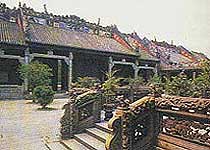
Chen Clan Temple (Guangdong Folk Art Museum)
Chen clan academy YuGuangXu twelve years (1894) is built, was 72 county of guangdong province in the construction of the joint venture's person's surname surnamed Chen and family's ancestral temple, around for their readers to guangzhou to attend the imperial examination, to provide housing when. Chen clan academy for SanJin type courtyard, by nine hall of 19 building size six composition. Its construction decoration embodies the essence of guangdong folk decorative arts, ingenious ... View Detail
Sand
Shamian, previous known as Zhongliusha or Shicuizhou, is an elliptic sandbar in the Liwan District of Guangzhou City, Guangdong Province. The island's name literally means "sandy surface" in Chinese. Surrounded by water, Shamian is just like a giant ship mooring alongside the wharf. Get further and one will find that the island is carefully planned. Three east-west avenues, Shamian North Avenue, Shamian Avenue and Shamian South Avenue, and five north-south streets, Shamian Street ... View Detail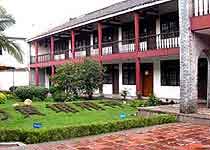
The former site of the Whampoa Military Academy
The Huangpu Military Academy site, in actuality the Army Military College, lies on Changzhou Island in Huangpu, over 20 kilometers from the southeast Guangzhou City of Guangdong Province. Huangpu Military Academy was the result of the first KMT-CCP cooperation. It was founded in May 1924 when the KMT had just accomplished a reshuffling with assistance from the Communist International and the China Communist Party, when the First Congress of the KMT of China had just closed. To cultivate ... View Detail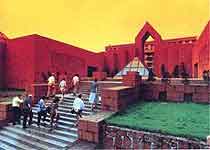
Mausoleum Museum of South Vietnam
The Tomb Site of the Nanyue King The tomb of the second Nanyue king was discovered by chance in June 1983 at a construction site in the Xianggang Hill in Guangzhou City. The State Council authorized the excavation of the tomb in October in the same year. 10,434 historical relics were unearthed including the Administrative Seal of Emperor Wen in gold. The seal proves the identity of the occupant of tomb to be the second king of the Nanyue Kingdom, Zhao Mo. The Nanyue Kingdom was established ... View Detail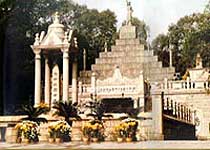
Huanghuagang seventy-two Martyrs
On April 27,1911(March 29, Lunar year Xinhai), Tongmenghui, a revolutionary Organization, led by Dr. Sun Yat-sen launched an uprising to overthrow the federal Qing dynasty to build a new democratic country, but unfortunately the effort failed . Seventy-two martyrs were found and buried here in the Huanghua Hillock. The cemetery was begun in 1912 and finished in 1921. (It was later determined that there were 86 martyrs, including 30 who were overseas Chinese.) On the gateway were inscribed four ... View Detail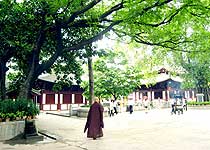
Takashi Akira Temple
Initially built during the Western Han Dynasty (207 BC - 24 AD) as a private house, it was used as a lecture hall before being dedicated completely to the function of a Zen Buddhist Temple during the Southern Song Dynasty (1127 - 1279). The many noted monks and sutra-translators who have resided there have contributed greatly to the spread of Buddhist culture. The pride of the temple is Hui Neng, the famous sixth master of Zen Buddhism, who had his hair cut and was initiated into monkhood there ... View Detail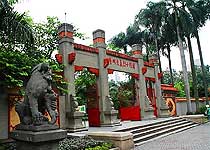
Guangzhou Uprising Martyrs Mausoleum
Guangzhou Uprising Martyrs' Cemetery is located in the Zhongshan Road, north of the school field safflower Post, was built in 1954, to commemorate heroic martyrs in the Guangzhou Uprising in December 1927. Cemetery divided in two parts of the tomb area and park. There is the main entrance of the main gate in tomb area , the tomb Avenue, Guangzhou Uprising Monument, Guangzhou commune Martyrs, the tomb of Marshal Ye Jianying, Heroes' Square and so on. The main entrance portal is the ... View Detail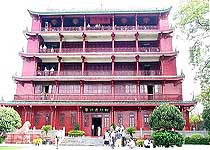
Zhenhai Tower (Guangzhou Museum)
Guangzhou Musuem-Zhenhai Tower Located within Yuexiu Park, the Zhenhai Tower sits atop the last remaining piece of Guangzhou's city wall. The tower was originally built in 1380 during the Ming dynasty, and has been the focus of much upheaval, resulting in the tower being destroyed and rebuilt a total of five times. It was last occupied by both the British and French during the Opium war, and was chosen for its super view of the city, as well as (on those rare clear days) views of Baiyun ... View Detail
Beijing Road, site of the Millennium Trail
This ancient road was born thousands of years ago, brought to light In 2002 a decade ago, Beijing Road Cultural Relics and Archaeology dug to 1.5 meters from the pedestrian pavement depths have emerged during the Republic of red, yellow sandstone, linen slate pavement, stone pavement of yellow sandstone, Ming and Qing Dynasties, Song Zhaoqing gray stone pavement towards the trail '. Guangzhou Municipal Institute of Cultural Relics and Archaeology staff First Beijing Road 309 in front of ... View Detail